Google

Rare Photo Of Sai

Rare Photo Of Sai

Friday, January 11, 2008

Location of Shirdi

Location of Shirdi
Shirdi is located in Ahmednagar district of Maharashtra in Western India. Shirdi extends latitude 19°45 N and longitude 74°25 E. This remote hamlet has gained a massive popularity across the globe for its association with the charismatic saint Shri Saibaba.

Shirdi is among most sacred pilgrim spots in India. Easily accessible from all the major cities of Maharashtra by road, Shirdi is equally approachable from across the country through rail and air network. However Shirdi does not appear on either rail or air, still a good road network ensures that the tourists have an easy and no-hassle travel to Shirdi by road.

Shirdi is quite close to the holy city of Nashik with just 90kms away. It takes about 6hrs to reach Saibaba of Shirdi from Mumbai. Pune is about 206kms from Shirdi.

Here is brief distance chart of Shirdi from some important cities of Maharashtra:
Mumbai 266 kms
Nasik 90 kms
Hyderabad 610 kms
Surat 373 kms
Nagpur 618 kms
Jalgaon 233 kms
Ahmednagar 83 kms
Aurangabad 144 kms
Delhi 1166 kms
Pune 207 kms
Sholapur 312 kms

How to Reach Shirdi

How to Reach Shirdi Saibaba
The sacred abode of Shri Sai Baba at Shirdi is easily accessible from all the corners of India and even from all the major cities of the world. You can reach this pilgrim center by air, train and road, which ever medium that suits you.

By Air
The nearest airport to Shirdi is at Nashik, 75kms away, Aurangabad is at a distance of 150kms, which is connected by all the major towns of India. You can also come till Mumbai by air and travel down to 296kms to reach Shirdi. Mumbai has both international and domestic airports that grant connectivity to the world. Domestic airport in Pune is about 231kms from Shirdi. There are regular public and private transport operators that ensure your easy access to the sanctum of Saibaba.

By Rail/Train
Kopergaon on Daund-Manmad Line is an important railway station about 16kms from Shirdi. This station is on the route of the Karnataka Express from New Delhi to Bangalore. Manmad is another important station about 58kms from Shirdi which carries a number trains from Mumbai and Delhi. Shirdi has a computerized Railway Ticket Booking Center within the temple premises. From here you can have railway tickets of whichever destination all through India.

By Road
Shirdi can be reached by taking a Bus from almost all major cities of Maharashtra. Shirdi is on the Ahmednagar-Manmad Highway, 250 km from Mumbai and 75 km from Nashik. MTDC runs buses from all major destinations.

Best Time to Visit Shirdi

Best Time to Visit Shirdi
Monsoons : June to August
Ramnavami : March/April
Guru Purnima : July
Vijayadashmi (Sri Sai Punyatithi) : October

Shirdi is the holy abode of Shri Sai Baba and thousands of pilgrims throng the town each day from across India and beyond. You can visit the Shri Saibaba temple at anytime you wish, however Monsoons i.e., between June and August are the period considered to be the best time to be here. Reason being the weather, which is simply so pleasant and inviting. You don't need to bother about sweat and heat; with drizzling and cool breeze all around your mystical journey to Shirdi becomes heavenly. Winters are also quite a good time to visit Shirdi. Winters are not harsh in here and temperature can dip to 7 degree Celsius.

However, you can plan your trip or pilgrimage to Shirdi during one of the three major festivals that are celebrated here with great fervor and excitement. These three festivals are Ram Navami, Guru Purnima and Vijayadashamai. During these festivals thousands of devotees flock in here and the whole atmosphere of the Shirdi becomes vibrant with puja, bhajan (music), rath yatra (processions with palanquin) and many more events.

You can come to participate in Ramanavami at Shirdi, celebrated every year in March or April. It is also the time when Saibaba's urus is held. Urus is a muslim festival that is celebrated to honor a saint. This shows the kind of communal harmony that weaves people of different faiths at Shirdi. This year that is in 2007, Shirdi is celebrating the Ramnavami from 26th to 28th of March.

Gurupurnima or Full Moon is also a wonderful time to visit Shirdi. In 2007, Shirdi is celebrating Guru Purnima from 28th to 30th July. This is the time devotees all across the world converge in Shirdi to seek Saibaba's blessings. There is also Vyasa Puja that is held during Guru Purnima, in honor of Ved Vyasa who wrote the epic Mahabharata.

Vijayadashmi is a big festival in Shirdi, venerated as a holy day when Shri Saibaba left his mortal body for heavenly abode. The festival is celebrated as Shri Sai Punyathithi in Shirdi attracting great number of devotees from all over the world. This year the festival is celebrated from 20th to 23rd October.

You can choose any of the festive seasons to make a spiritual journey to Shirdi and of course any other time is equally fulfilling.

Excursions around Shirdi

Excursions around Shirdi
Pilgrims visit Shirdi to make a mark in their spiritual journey. This holy land becomes a turning point in the lives of many devotees. Coming to this holy land is also an invitation to visit many religious sites that will interest you. About 75kms from Shirdi lies Nashik, another of major holy cities of India. You could also venture out to Ajanta and Ellora caves in Aurangabad about 144kms from Shirdi. There are many more significant religious and tourist destinations that will make your pilgrimage to Shirdi even more worth cherishing.

Sakori
Close to Shirdi is Sakori at a distance of about 5kms. Sakori is a very special place and popular among pilgrims for its Shri Upasani Kanyakumari Sthan. You can come here for peace and tranquility. Founded by Upasani Baba in 1917, Shri Upasani Kanyakumari Sthan reverberates with positive energy that can be felt by anyone. Shri Sai Baba took him as his Param Shishya, meaning Astute Devotee.

Shanisinghnapur
Shanisinghnapur is a village that is the holy seat Lord Shani. Another important pilgrim spot near to Shirdi, Shanisinghnapur is about 70 km from here Shirdi. Here the devotees themselves can perform pooja and abhishek on any day at Shari Shaneshvar tirtha. Amavasya or the no moon day, which falls on a Saturday, is considered to be most auspicious. On such a day lakhs of devotees from all corners of the country come to receive blessings of Shri Shanidev. On every Shani Amavasya a yatra is held with great fanfare. One unique quality about this village is that there are no doorframes or locks in any of the houses. It is said that it's because of Lord Shani's blessings that there is no fear of crime in the village.

Nashik
Nashik is among the most holy places that evokes a personality of its own. Rich in mythological connotations with great historical and cultural significance, Nashik is about 75 km from Shirdi. Here you can visit several of temples and religious spots making your spiritual journey lively and fulfilling. Among the temples you could visit Panchavati with five sacred banyan trees and Sita Gumpha. You can also visit Naroshankar Temple built in an architectural style of Maya. Kalaram Temple is dedicated to Kala Ram built with black stones. Sundarnarayan Temple is situated at the corner of Ahillyabai Holkar Bridge. In addition to many temples and religious places, Nashik also has Shri Kailas Math, one of the Vedas Schools in Nashik.

Ajanta and Ellora Caves
About 144kms from Shirdi are the world famous Ajanta and Ellora Caves. As the ancient repository of Indian architectural heritage, these caves are located near the city of Aurangabad in Maharashtra. Ajanta and Ellora caves are the world heritage sites famous for the cave shrines that are cut out of rock, all by hand. There are 34 caves at Ellora and 29 caves at Ajanta. And all are sheer outstanding specimens of Indian architectural excellence.

Worship schedule Saibaba Temple in Shiridi

Worship schedule in Saibaba Temple
Here is the daily program at Sai Temple at Shirdi. The worship schedule at Saibaba temple begins early in the morning that continues till late in night. The daily worship program includes various rituals and rites that go into invoking Saibaba, and the congregation of devotees who seek the blessings of Shri Saibaba. Dwarkamai, Gurusthan and Chavdi get open for the devotees at 4.30am and the Samdhi Mandir opens at 5am. With this temple is ready with prays and other rituals invoking Saibaba of Shirdi. At 9pm Chavadi and Gurusthan close. At 9.45pm the upper part of Dwarkamai closes. And finally at 10.45pm the Samadhi temple is closed till the next day.

4:30: Dwarkamai, Gurusthan, Chavadi open

5:00: Mandir opens, Bhupali, Abhishekam at Gurusthan

5:15: Kakad (morning) Arati, Naivedyam of butter and sugar to Baba in Samadhi Mandir, Oil offered to the lamps in Dwarkamai

5:40: Bhajan in Saibaba Mandir

6:00: Mangal Snaan (washing) of Statue and Samadhi in Samadhi Mandir

7:00: Darshan begins in Samadhi Mandir

9:00: Naivedyam in Samadhi Mandir and Dwarkamai

8:00 -10:30: Satyanarayana Pooja

11:30: Dhuni Pooja with rice and ghee in Dwarkamai

12:00: Mid day Arati

12:30: Naivedyam in Samadhi Mandir, Dwarkamai and Gurusthan

4:00: Pothi (Devotional reading/Study) in Samadhi Mandir Sunset: Dhoop (evening) Arati

6:30: Naivedyam in Samadhi Mandir, Dwarkamai and Gurusthan

8:00 - 9:00: Devotional Songs in Samadhi Mandir and other Cultural Programs (if any)

9:00: Chavadi and Gurusthan close

9:30: In Dwarkamai water is given to Baba, a mosquito net is hung and the hanging lamp is lit

9:45: Dwarkamai (the upper part) closes

10:00: Shej (night) Arati, after this , a shawl is wrapped around the statue in the Samadhi Mandir, a Rudraksha mala is put around baba's neck, Mosquito net is hung, and a glass of water kept there

10:45: Samadhi Mandir closes after night Arati

Hotels In Shiridi

Hotels in Shirdi

Sun N Sand Shirdi (5 Star)
Hotel Sun n Sand, the first and only 5 star hotels in Shirdi, is located close to the Sri Sai Baba temple.

(4 Star)
Hotel Goradia's, a fashionable luxury hotel setting international standards of hospitality and comfort, is an exclusive haven of solitude and luxury.

(3 Star)
Hotel Sai Leela, a Sai devotee hotel, is located within 5 minutes walk from the Sai Baba temple.

(3 Star)
Hotel Sai Sahavas, a 3 star hotel, is located at a walking distance from the Shri Sai Baba Temple, which gives the tourists and devotees an easy access to the temple

Shraddha Park Inn Shirdi (3 Star)
Hotel Shraddha Park Inn epitomizes the peace and serenity expected by all devotees of Shri Sai Baba, who visit this temple town for spiritual enlightenment.

Sai Paintings


photos page 4

Statue of Shri Dattetrey near Nandadeep in Shirdi

Shri Sai Baba statue in Guruasthan

Shri Sai Baba photo in the visitor room in the Samadhi Temple

Shri Sai Baba photo in Guruasthan

photos page 3

Sai in Dwarkamayee

Original Things used by Shri Sai Baba, also seen in the picture Muralitharan statue which had to be placed at the Samadhi Mandir

People who were in contact with Baba Ji, while he was living

Statue of Shri Sai Baba

photos page 2


The original Samadhi Mandir


New Samadhi Mandir


Sai Baba at Samadhi Mandir

ganesha_idol.jpg (28870 bytes)


Lord Ganesha's idol which was presented by Baba to Shyama

sai_babas_chimta.jpg (27282 bytes)


Abdul Baba's Chimta

sai_babas_slippers.jpg (40619 bytes)


Sai Baba's khadau ( Slippers )

udho_babas_wife_tai.jpg (25046 bytes)


Udho Baba's wife who is popularly known as "Tai"


Dwar Kamai


New Fountain at Landi Bagh


Chawri Procession


Chawri Photo


Sai Baba's Abhishek Aarti


Statue of Bhagat Mahalspiti in the Khandoba Temple

Original Photos


photos page 1

Shri Sai Baba painting in Chawri

Shri Sai Baba painting in Chawri

Shri Sai Baba painting in Chawri

Shri Sai Baba's bed

Shri Sai Baba's chair

Shri Sai Baba's photo in Chawri

Shri Sai Baba's photo

Shri Sai Baba's statue

Shri Sai Baba's Samadhi

Festivals in Shirdi

Festivals in Shirdi

Ramnavami : March/April
Guru Purnima : July
Shirdi Vijayadashmi (Sri Sai Punyatithi) October

RangoliFestivals are great time to visit Shirdi of Saibaba. There are three major festivals that are held in Shirdi attracting thousands of devotees from across the world. The three major festivals celebrated at Shirdi are Ramnavami, Guru Purnima and Shirdi Vijayadashmi. All these festivals are celebrated all across India with equal zest and excitement but at Shirdi they have some other significance. All these festivals have their special distinction to them in the way they are celebrated in the other parts of India. The distinction is the association of Saibaba himself which add to these festivals all new and exciting verve to them.
Ramnavami
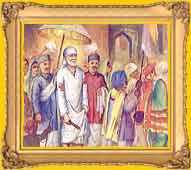
Ramanavi is one of the most important festivals celebrated with great excitement and fanfare. In the year 1897 Goplarao Gund proposed holding in Urus in name of Saibaba in gratitude of a child which he was granted after so many childless years. Saibaba conceded to celebrate his urus on the condition that it be celebrated on Ramnavami. This was indeed an ingenious touch of Saibaba bringing together the Hindus and Muslims together. People may know Urus is a Muslim festival that is celebrated to honor a saint.

You can come to participate in Ramanavami at Shirdi, celebrated every year in March or April. This shows the kind of communal harmony that weaves people of different faiths at Shirdi. Ramnavami has equal and enthusiastic participation of both Hindus and Muslims. In Shirdi, two locally historic rituals are carried out during this festival. The sack of wheat that is kept in Dwarkamai is changed and the old one taken to prasadalaya to be used there, and secondly, the dwarkamai flags are replaced. This year that is in 2007, Shirdi is celebrating the Ramnavami from 26th to 28th of March.

Gurupurnima
Gurupurnima or Full Moon is also a wonderful time to visit Shirdi. It is the time to honor the Guru and seek his special blessing. Quite a significant festival in Shirdi Guru Purnima was the only festival which Saibaba has asked his devotees to celebrate. This is the time devotees all across the world converge in Shirdi to seek Saibaba's blessings. There is also Vyasa Puja that is held during Guru Purnima, in honor of Ved Vyasa who wrote the epic Mahabharata.

Shirdi Vijayadashmi
Vijayadashmi is a big festival in Shirdi, venerated as a holy day when Shri Saibaba left his mortal body for heavenly abode. The festival is also celebrated as Shri Sai Punyathithi in Shirdi attracting great number of devotees from all over the world. Various religious activities are arranged Great number of people flock to Shirdi during this Festival. During this festival 'Brahman Bhojan' is arranged with Dakashina (Donation to Guru). This year the festival is celebrated from 20th to 23rd October.

Temple Complex Shirdi

Temple Complex Shirdi

The Saibaba temple is situated in the heart of Shirdi village spreading in approximately 200sqmts, attracting thousands of pilgrims from across the world. The temple premises has several of important sites connected to Saibaba of Shirdi that are venerated by all the devotees. Here we are discussing the important sites inside the complex of Shirdi Saibaba temple.

Khandoba Temple
Khandoba temple holds a special place in Shirdi, since this was the site which saw the coming of Saibaba in his tender years dressed in kafni. It is believed that when this young man, with flowing beards and sparkling eyes, approached the temple premises as one of the guest of a wedding party, the temple priest Mhalsapati greeted him as 'Ya Sai'. This name led to the appellation and evolution of one of the most admired spiritual gurus of India.

Earlier the temple lay on the periphery of the village and Khandoba was the tutelary deity of the Mhalsapati family. Peaceful and secluded ambience of the temple impressed Saibaba. At the entrance to the temple is a large banyan tree which is mentioned in the 'Shri Sai Satcharitra' as the place where the bullock cart halted. It is now commemorated with a small shrine and 'padukas' or footwear of Saibaba lay at its base.

Gurusthan
Gurusthan means the place of the Guru. It is significant because here Saibaba spent most of his time here, when he first came to Shirdi. It is also the same place where, according to Saibaba, the tomb of his own guru was located by the Neem tree. The neem tree is still extant in the Gurusthan and there is also a pair of marble padukas on a pedestal, a 'Shivalinga' and a statue of Baba. A small dhuni on a stand is kept in front of the shrine, which is lit on Thursday and Friday. Gurusthan is a wonderful place sit and meditate in peace that generates an inner peace leading to unison with Sai Baba.

Samadhi Mandir
Samadhi Mandir houses Saibaba's tomb and was originally constructed as a wada (large private house) during Saibaba's last years. The Samadhi Mandir has the statue of Saibaba all in white marble sitting in relaxed, natural and majestic demeanor gazing at the millions of devotees who throng the temple for his blessings.

The daily routine of the temple resumes at 5 in the morning with Bhoopali, a morning song, and closes at 10 in the night after the Shej aarati is sung. Only on three occasions the temple is kept open overnight i.e. on Gurupurnima, Dassera, and Ramnavmi. Every Thursday and on each festival, a Palakhi with Baba's photo is taken out from the temple.

Dwarkamai
Dwarkamai in one of the cherished treasure troves of Shirdi associated with Saibaba. When Shri Sai Baba came to Shridhi with a marriage procession, he stayed at Dwarkamai and remained there till the very end of his life. It is situated on the right of the entrance of Samadhi Mandir. Here Saibaba used to heal the sufferers and the sick.

Dwarkamai used to be an old mosque in a very bad shape. Saibaba restored its sanctity turning it into Dwarkamai. It has a portrait of Saibaba and a big stone where he used to sit. Dwarkamai has the Kolamba, water pot and the grinding stone associated with Saibaba. It also has a chariot and a palkhi.

Chavadi
Chavadi literally means village office. In Shirdi Sai temple Chavadi is located on the right side of Dwarkamai. Saibaba used to alternatively sleep in Chavadi, during the last decades of his life. Chavadi is open to devotees from 5am to 9pm. Inside the Chavadi there is large portrait of Saibaba. It also has a wooden bed on which Saibaba was given his last bath before passed away in Dwarkamai. The building also has the framed photo of the cross-legged Saibaba which is taken out on procession on festivals and each Sunday.

Lendi Gardens
Lendi is an important place where Saibaba used to spend his time everyday. It has some tombs, a shrine and a perpetually burning lamp lit by Saibaba and placed between the two trees he planted.

Sai Baba's Devotees

Sai Baba's Devotees

Shri Sai Baba of Shirdi had a great impressionable personality which hypnotized those who came near him. With his miraculous power and simple teachings he had a host of ardent devotees who carried forward his teachings and philosophy to a wide gamut of society. Here we will discuss some of the most prominent devotees of Saibaba of Shirdi.

Sai Baba's Devotees Abdul Baba
Abdul Baba came to Shirdi in around 1890. He came here after a fakir who was inspired in his dream by Saibaba to bring Abdul Baba to Shirdi. On his coming to Shirdi, Saibaba greeted him by saying "My crow has come". A dedicated worker Abdul Baba took care of Baba's mosque and lit the lamps in Lendi. Baba took care of his welfare, and often had him reading aloud passages from the Koran.

Bayajabai Kote Patil
Bayajabai was Tatya's mother and the family had a close association with Baba, who he took as his sister. She had taken a vow that until Saibaba had her food she won't take food. Such was her devotion to Saibaba that she would carry food in a basket and went looking for him to feed him.

Bhagoji Shinde
Bhagoji Shinde suffered from leprosy and yet he was among the closest to Saibaba. He accompanied Saibaba to Lendi garden carrying a parasol to give him shade. Once Saibaba got hurt while thrusting his hands into dhuni, Bhagoji was the one who bandaged the wound and dressed him long after it had healed.

Das Ganu Maharaj
Dasganu was originally in police service and it was during this time that Nana Chandorkar took him to see Sai Baba. Das Ganu wrote about the lives of saints and composed kirtans (devotional songs) which he sang with great fervor.

Annasaheb Dabholkar
Most popularly known for being the author of the work The Sri Sai Satcharitra, Annasaheb Dabholkar was called Hemadpant by Saibaba after a well known poet of 13th Century. His work is a great insight into the life and philosophy of Saibaba.

Hari Sitaram Dixit
Hari Sitaram alias Kakasaheb Dixit was a prominent solicitor another of Saibaba's ardent devotees. Saibaba used to call him affectionately Langda Kaka and removed fear complex from his mind. Kaka Dixit was known for his obedience to Baba's orders.

Dadasaheb Khaparde
Hon'ble Mr. Ganesh Shrikrishna alias Dadasaheb Khaparde of Amraoti, an ardent devotee of Saibaba and was instrumental in bringing Loka Manya Tilak, the great freedom stalwart to Shirdi for Baba's darshan.

Laxmibai Shinde
Laxmibai Shinde was well-to-do woman, who worked in the masjid day and night. Except Bhagat Mhalasapati, Tatya and Laxmibai, none was allowed to step in the Masjid at night.

Bhagat Mahalsapati
Mahalsapati was the one who owes the name of Saibaba as we know it today. He uttered 'Ya Sai,' when Baba made His first appearance at the Khandoba temple along with the marriage party of Chandbhai. Saibaba used to call Mahalsapati 'Sonarda,' and later on 'Bhagat' i.e. close disciple.

Tatya Kote Patil
Tatya Kote Patil's family was one who loved Saibaba for Himself and not for what they got from His divinity. Tatya was the first amongst the devotees who had all the love of Saibaba.

Nanasaheb Chandorkar
Nana Chandorkar was among the most prominent devotees. A Deput Collector by profession, he had the distinction of being one of the very few disciples that Baba directly called to his side.

MadhavRao Deshpande
MadhavRao Deshpande was another of Saibaba's ardent disciples who was quite close of Saibaba.

Sai Baba's Teachings

Sai Baba's Teachings

Sai Baba of Shirdi is the epitome of reverence a guiding force who generates supreme faith and confidence among his devotees looking for salvation and in quest of coming out of the drudgery of living. As a divine mother he is saturated with love for those who seek him. With his mission of making people about the divine consciousness and transcending the limits of mortal body, his teachings are guiding his devotees to the path of salvation. People are blessed who follow his teachings.

Sai Baba's TeachingsAmong the teachings of Sai Baba of Shirdi there are the cardinal principles of Sai Path called 'Shraddha' and 'Saburi'. Sai Baba looks for these two qualities in his devotees. Here are the teachings and philosophies of Sai Baba of Shirdi.
Shraddha
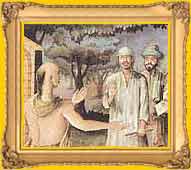
'Shraddha' is a Sanskrit word, which roughly means faith with love and reverence. Such faith or trust is generated out of conviction, which may not be the result of any rational belief or intellectual wisdom, but a spiritual inspiration. According to Sai Baba of Shirdi, steadfast love in God is the gateway to eternity. Baba's teaching, both direct and indirect explicate the significance of 'Shraddha'. Baba reiterates the spiritual guidance of Shri Krishna to Arjun - "Whosoever offer to Me with love or devotion, a leaf, a flower, a fruit or water, that offering of pure love is readily accepted by Me".

Saburi
'Saburi'; means patience and perseverance. Saburi is a quality needed throughout the path to reach the goal. This quality must be ingrained in a seeker from day one, least he looses his stride and leaves the path half way

Purity
For Sai Baba it was not the purity of the body but inner purity that mattered. No amount of physical and external cleansing would serve any purpose if the man remained impure in mind and heart. Therefore, Baba cautioned His devotees not to make austerity as an end itself, lest they should indulge in physical mortification.

Compassion
Himself an epitome of compassion and love, Sai Baba taught compassion among his disciples. Baba often told His devotees, 'Never turn away anybody from your door, be it a human being or animal'.

Complete Surrender to the Guru
Sai Baba put Guru on a high pedestal of reverence. For Him Guru was the profound base of the path of devotion. Pointing to his physical frame, "This body is my house. I am not here. My Guru (Master) has taken me away". He asked for complete surrender to the 'Guru'.

Sai Baba's Teachings through 'Udi' and 'Dakshina'

Udi
Udi or the sacred ash was produced from the perpetual fire called 'dhuni' lit by Sai Baba in Dwarkamai at Shirdi. Explaining the meaning of life He would refer to Udi and taught that like Udi all the visible phenomena in the world are transient. Through this example Sai Baba wished to make his devotees understand the sense of discrimination between the unreal and the real. Udi taught the devotees discrimination or vivek.

Dakshina
Sai Baba would demand 'Dakshina' or alms from those who visited him. This explained the sense of non-attachment to worldly things. Hence Dakshina taught the devotees non-attachment or Vairagya.

Sai Baba's Mission

The spiritual guru and redeemer of mankind, Sai Baba of Shirdi has been one of the greatest influencing gurus of the Modern times. As among the most popular Indian saints with an ever growing following of devotees, Sai Baba inspires an unflinching faith on his devotees with his clear cut mission to provide not only a spiritual awakening, but also saving the mankind from suffering and ignorance.

MissionOf Sai BabaForsaking the worldly pleasure in his tender years Sai Baba came to Shirdi with a mission that sprang from the source of His free and redeemed spirit. His mission was self-allotted and that was to awaken the mankind to his true self and divine nature. He wanted to lead them to salvation by saving them from delusion and ignorance. Such is His benevolence that Sai Baba stands there eternally extending His helping hand to give solace to His children who are suffering and leading a wretched life devoid of any hope.
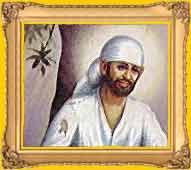
With the whole world under benevolence Sai Baba inspires an undying hope among the mankind. Thus, it is His sacred mission to awaken, elevate, transform and comfort His children. These may be the tangible missions of Sai Baba that ensure harmony all around. However, He had several bigger missions as well that encompassed the whole of universe and its administration including creation, sustenance and destruction. Ultimately, the mission of Sai Baba was to evolve human beings to the state of godliness, i.e., realizing the spiritual body in the mankind leading to their complete redemption and salvation. His powerful assurance 'Why fear when I am hear' has been the great source of strength among the ever growing number of Sai Baba's devotees.

Life Of shiridi Saibaba

Life of Shirdi Saibaba

Shri Saibaba of Shirdi lived between 1838 and 1918, whose real name, birthplace and date of birth are not known. An Indian spiritual guru and a fakir that transcended the barriers of religions, Saibaba of Shirdi was regarded with great reverence by both Hindu and Muslim followers. He lived in a mosque and after death his body was cremated in a temple.

Life Of Sai babaHis philosophy ingrained 'Shraddha' meaning faith and 'Saburi' meaning compassion. According to him Shraddha and Saburi were the supreme attributes to reach the state of godliness.

It is believed that at a tender age of 16 yrs Shri Saibaba arrived at the village of Shirdi in Ahmednagar district of Maharashtra and remained their till his death. He found shelter in Khandoba temple, where a villager Mahalsapathi in the temple addressed him as Sai or Saint.

Saibaba of Shirdi lived an extremely simple and austere life, sleeping on the floor of temple and later taking a ruined mosque as his shelter. With his arrival to Shirdi, in no time he began exhibiting a hypnotic attraction among people as they began flocking to him. He is attributed many miracles doing things that were beyond a mortal's power. He never discouraged these attributes and soon his fame spread like wild fire. Many pilgrims came seeking his blessings. Such was his hypnotism that even the mundane of his activities attracted large crowds.

Popular among both Hindus and Muslims, Shri Saibaba became a great building force between the two disparate communities. He regularly recited Hindu and Muslim prayers. His Hindu followers considered him to be an avatar or reincarnation of Shiva and Dattatreya. Sai Baba did not leave any written works. All his teachings were oral and catchy. His sayings were short, crisp and in layman language with which the common mass could easily associate.

Saibaba encouraged charity and said, "Unless there is some relationship or connection, nobody goes anywhere. If any men or creatures come to you, do not discourteously drive them away, but receive them well and treat them with due respect."

Shri Sai Baba of Shirdi was unique in the sense that he lived his message through the essence of his being. He lived among the common people adorning a torn kafni (long robe), sleeping over a mat while using brick as his headrest and got his food by begging. Such was his smile that radiated a mystical charisma and deep seated inward look that hypnotized the people who visited him.

His most concise message for one and all alike was "Why fear when I am here".
Saibaba said that he was a slave in the service of those who loved him. He was ever living to help those who turn to him and that he has to take care of his children day and night.

Saibaba's mission was to restore belief in god and according to him, "I give people what they want in the hope that they will begin to want what I want to give them (knowledge of the Ultimate)." He then taught values of total surrender to the Almighty Master (ALLAH MALIK EK- The only ONE) and experiences his grace.

Today, Shri Saibaba has millions of devotees in India and abroad. Shirdi, the obscure village in Maharashtra has become a pilgrimage destination much as Bethlehem, Jerusalem or Varanasi. With over 25,000 pilgrims thronging in here each day the number of pilgrims climb to over a hundred thousand on holidays and festival days. There are over 2,000 major Sai temples in different parts of India and 150 abroad in places as far-flung as Canada and Kenya, Singapore and England.